Archive for March, 2010

Alys Fowler at The Garden House…

Posted by editor on Saturday, 20 March 2010

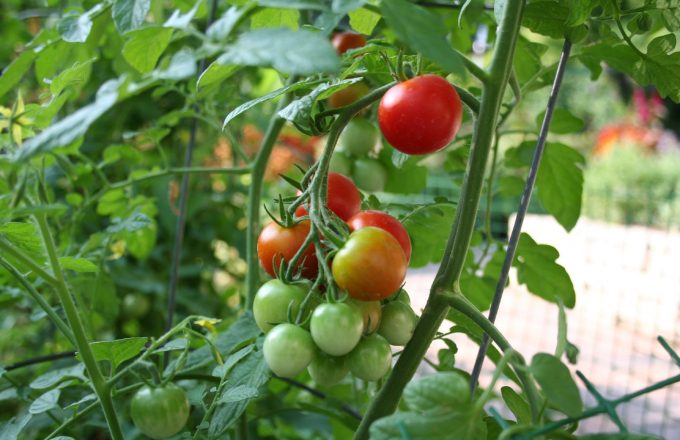
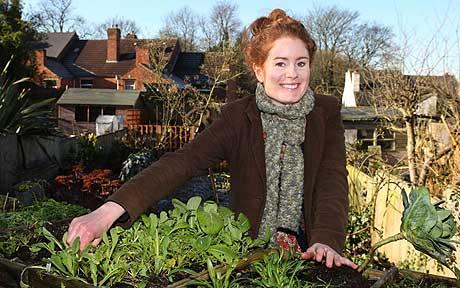
We’re delighted to welcome Alys Fowler to The Garden House on Saturday 10 July. Alys, the well-known writer and horticulturalist, and Gardener’s World presenter, will lead a workshop on the ‘edible garden’.

“I want a beautifully productive garden that weaves together flowers, fruit and vegetables in a way that mimics natural systems, – so that nature and I can get along peacefully together”

Alys’ philosophy chimes perfectly with ours at The Garden House – it will be great to hear her ideas on how to grow flowers and vegetables together – ideas and practical demonstrations on how to achieve success in our own back garden or allotment.

It promises to be a very special day here at the Garden House! Do book early as places will be limited.  Go to Diary on this website for full details and booking form.

Alys started gardening in her early teens and after leaving school trained at the Royal Horticultural Society, the New York Botanical Gardens and the Royal Botanic Gardens at Kew. She started working at BBC Gardeners’ World as a horticultural researcher, appeared at the Gardeners’ World Live show last summer and is currently filming the new series of Gardeners’ World.

She writes for all those who are interested in transforming unexpected spaces, like urban locations, into thriving gardens.

In her new book, The Edible Garden (BBC Books, £18.99), which coincides with a six-part BBC television series starting early April, Alys shows how to grow flowers and vegetables in any back garden, without worrying too much about the rights and wrongs of what you may be doing.

“I would argue that what I’m doing is really, really old school. Veg and flowers growing together is the ancient way of doing agriculture, it’s the traditional cottage garden.” (quote: 13 March www.telegraph.co.uk )

Go to Diary on this website for full details and booking form.

Exhibition: Plant Portraits

Posted by editor on Tuesday, 16 March 2010

Plant Portraits opens on 2 April at Brighton’s Booth Museum (until 24 September 2010).

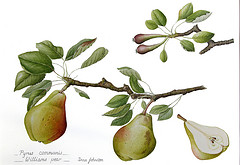
Botanical artists can create images of extraordinary beauty  - images that convey a plant’s technical form and structure in ways that a photograph cannot. This exhibition, curated by The Botanical Art Society of Sussex in conjunction with the Booth Museum of Natural History, highlights the importance of art in understanding and communicating the natural world and the plants that are fundamental to our survival.

Paintings include flowers, fruits, vegetables and fungi; enriching images supplemented by magnificently illustrated botanical books and specimens from the Booth Museum.

The Botanical Art Society of Sussex was founded in 2003 to bring together Sussex botanical artists. Botanical illustrators today are not just flower painters, but inheritors of a legacy of historical importance going back to the time of the ancient Egyptians. To be successful they have to be technically highly competent in drawing and painting, with some knowledge of botany and the ability to convey the sense of wonder of the plant world.

The Booth Museum was founded in 1874 by naturalist and collector Edward Thomas Booth.  The Victorians were passionate about natural history and Edward Booth’s particular interest was ornithology, the study of birds.

In 1971 the Booth became a Museum of Natural History. It is now home to a staggering collection of 525,000 insects, 50,000 minerals and rocks, 30,000 plants and 5,000 microscopic slides.

Today the museum retains its unique charm of the quirky and eccentric with its focus on Victorian taxidermy and fossils, bones and skeletons.  And yet it is also firmly focused on modern day concerns of conservation and protection of the planet.

It is truly a fascinating and unique place to visit…

Booth Museum of Natural History, 194 Dyke Road, 
Brighton BN1 5AA

Tel. 03000 290900 / Email visitor.services@brighton-hove.gov.uk

Garden details…

Posted by editor on Saturday, 13 March 2010

In winter and early spring whilst you’re holding your breath waiting for some signs of new growth, it is all to easy to get impatient and despair.

Yet we love this time of year – the garden is laid bare, and the skeletal structure of trees, shrubs and plant supports take on a beauty of their own – occasionally dusted with frost or dripping with rain.  Instead of bemoaning the late start, look closely and review how your garden looks now.  Even take a few photos as a reminder – does it need more evergreen shrubs to give winter structure, some Cornus sanguinea or Salix for bright winter stems, should you have left the tall grasses standing, not just for the insects and birds, but also for height and drama?

Good structural plants include clipped box (Buxus sempervirens) used for low hedging, clipped cones or spheres.  Also Sedum, Euphorbias, Phormium and Fatsia Japonica.  The white bark of Betula Utilis var. Jacquemontii (Himalayan birch) looks spectacular, great for uplighting in winter.

Look too at the small details that give your garden its early season personality.  Maybe bird-feeders made by local artisans, pieces of carved stone lined up against a wall, or mosaic paving stones giving a flash of colour?  At The Garden House we cut bright red Cornus branches and use them to edge the vegetable garden, and small pots of bulbs are lined up on little tables.

Take this opportunity to tidy up scrappy fences, fix trellises that have suffered the previous season, oil or stain outdoor furniture or sheds.

Now is the time to think about creating some dynamic new plant supports, using hazel, birch or willow – it’s easier to get them into place now well before a burst of growth makes it hard to get onto the borders.  Join our Creative Plant Staking workshop on Friday 16 April – check this website’s Diary for details.

All too soon this elegant buff-coloured bareness will be overtaken by lush green growth – so enjoy it while you can!

Ornamental grasses with Monica Lucas…

Posted by editor on Wednesday, 10 March 2010

“Rushes are round, sedges have edges, and grasses are glorious”. So said expert grower Monica Lewis at last Saturday’s Garden House workshop!

Enthusiastic and hugely knowledgeable, Monica talked the group through the seemingly endless and largely irresistible variations.  So, why grasses?

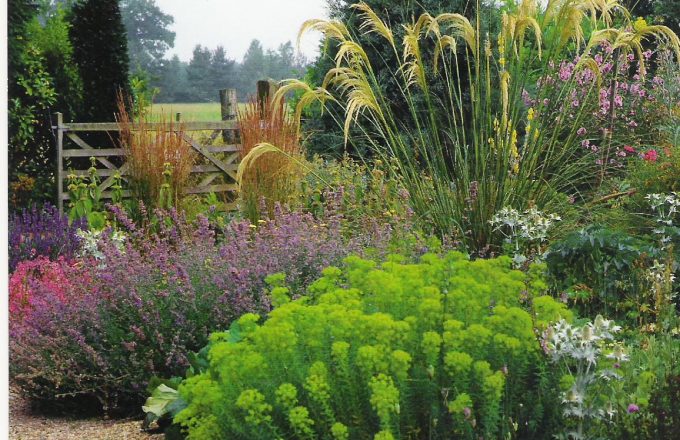
Grasses are versatile, an almost essential component in any modern planting scheme. They rustle delicately in the wind (the larger the leaf the more noise they make) and change colour according to season, light levels, sun and shade, rain or frost.  They can be used as hedging, as low-level edging for pathways or beds – they can be planted as ribbons through beds to give visual continuity, or used to create a stunning backdrop for contrasting perennial planting.  Some are evergreen, some deciduous. Many grow well in containers.

There are also annual grasses, easily grown from seed, which mix beautifully with hardy annuals in the cutting garden.

The last ten years has seen grasses return to fashion in a big way. Naturalistic prairie-style planting – developed in Germany, Holland (think Piet Oudolf) and North America – sees blocks of tall grasses and statuesque perennials mingled together to form flowing borders of late-flowering colour.

To see this style of planting at close-hand, visit the stunning 6-acre Sussex Prairie garden near Henfield, Sussex (featured on this website 24.11.2009).  Here the large borders, planted by owners Paul and Pauline McBride, combine perennials with huge drifts of ornamental grasses, including varieties of Miscanthus, Panicums, Molinias, Sporobolis and Penisetum.  For open days check www.sussexprairies.co.uk

Monica Lucas talks about ‘cool growers’ and ‘warm growers’.  Cool growers flower in late spring and early summer (propagate in spring and autumn), whilst warm growers flower in summer and autumn, keeping most of their dried flowers all winter until broken down by the weather (propagate in spring and early summer).

In general grasses need a free-draining moisture-retentive soil – and whilst there are always exceptions to the ‘rules’, and many other options, Monica suggests the following:

Grasses for chalk:

  • Koeleria glauca
  • Melica ciliata

Grasses for clay:

  • Calamagrostis x acutiflora cvs.
  • Deschampsia caespitose cvs.
  • Elymus glaucus
  • Phalaris arundinaria cvs.

Shade tolerant grasses:

  • Briza media
  • Calamagrostis acutiflora Karl Foerster
  • Calamagrostis brachytricha
  • Carex (most cultivars)
  • Deschampsia caespitose cvs.
  • Hackenochloa macra cvs.
  • Milium effusem aureum
  • Miscanthus sinensis purpureus
  • Molinia caerulea (all cultivars)
  • Stipa arundinaria

Key learnings from the workshop:

  • For long term container planting, use ½ John Innes soil-based potting compost No2, ½ soil-less compost, a good deal of ½” grit for drainage, and a controlled release fertilizer (such as Osmacote).
  • Don’t over-feed (they won’t flower well) – grasses prefer a low-nitrogen soil – so go easy on the chicken pellets or manure, in preference use well-rotted garden compost.
  • If you like a plant, but are unsure if it will grow on your soil, buy three and plant them in various locations in the garden.  Wherever they grow best, transfer the others – they will have found their home!
  • Propagation involves digging out the plant and setting to (carefully!) with a variety of knives, saws, or even an axe, to cut the root ball into small sections ready to pot up for a few weeks before planting out.
  • Use a wide-toothed comb to ‘preen’ (not ‘prune’) evergreen grasses – combing out the dead stalks to clear space for new growth.

When pressed Monica told us her personal favourite is Miscanthus Nepalensis – common name: Himalayan fairy grass!

Preston Park vegetable garden…

Posted by editor on Monday, 8 March 2010

Everyone’s talking about growing your own veg these days, and a new initiative in Brighton and Hove aims to get more local residents growing by showing what is possible right on their doorstep!

Brighton & Hove Food Partnership’s Harvest project has been working with the City Council to start a demonstration fruit and vegetable garden in Preston Park. The garden will be packed with colour, textures, scent and taste, visible and open to the public with raised beds and containers showing different planting styles.

As well as operating as a resource for existing and new growers, the idea is that it will attract and introduce people to the idea of growing food and show the possibilities of growing their own produce, even in a small space. Local residents will help setup the garden, manage it and take home some of the harvest!

The Food Partnership is inviting local residents, gardeners, park rangers and councillors to celebrate the inaugural dig of the plot. Should be fun! If you are interested do come along – Tuesday 9th March, next to the Rotunda Cafe, Preston Park, at 4-4.30pm.

If you would like to volunteer and/or have tools that you can donate to the project, Harvest would love to hear from you. Contact: 01273 431700 or email: harvest@bhfood.org.uk

Visit to Beth Chatto’s garden…

Posted by editor on Friday, 5 March 2010

The Garden House is taking a spring trip to the wonderful Beth Chatto gardens at Colchester, Essex, on 17 April. It is so beautifully planted, and was such a rewarding experience when we went a few years ago in February, that we wanted to offer a trip to see the gardens at a different time of year.

Beth Chatto’s innovative style has transformed the “wilderness” (her words), that she and her husband were faced with in 1960, into one of the most inspirational gardens in England.  Perhaps it is the gravel garden which is most famous, planted with drought resistant plants and reflecting the mantra we should all follow, ‘right plant, right place’. This area in Essex has one of the lowest rainfalls in the country, but here in the south we have also experienced tremendous droughts and seeing the plants Beth Chatto uses in her garden can guide and inspire us for our own gardens.   The nursery is well-stocked, fabulous and not expensive.

As well as the gravel garden, created from the former car park, the rest of the gardens are magical. The garden has both dry and damp areas, sunny and shady – these challenges, plus her eye for design and colour have resulted in an exceptional visual harmony.

We are leaving Brighton quite early, 9am by coach, and plan to be back in Brighton by 6.30pm.  The cost is £42, two people booking together is £70, so do bring a friend along! We will offer refreshments on the coach, and there is a good cafe at the Gardens, or if you prefer, do bring a packed lunch.

For booking form, go to our Diary list, or contact us at contact@gardenhousebrighton.co.uk