Archive for June, 2011

Caramel orange and poppy seed cake

Posted by editor on Sunday, 26 June 2011

Enjoy one of our favourite cake recipes – and use up your leftover poppy seeds!

Ingredients:

  • 2 oranges, zested and juiced
  • 30g poppy seeds
  • 100ml milk
  • 200g butter, at room temperature
  • 175g caster sugar
  • 3 eggs
  • 300g self-raising flour
  • ½ tsp baking powder

Caramelised oranges:

  • 125g caster sugar
  • 2 oranges, sliced

Icing:

  • 100g caster sugar

Method:

  • To make the caramelised oranges, put the caster sugar in a frying pan in an even layer and heat until it starts to melt and turns a golden colour.
  • Tip the pan from side to side to keep the caramel as even as you can.
  • Once it reaches a dark gold, carefully add half the orange juice from the cake oranges (it will splutter so stand back).
  • Keep on the heat, stirring so that any lumps melt back into the caramel.
  • Add the orange slices and heat gently for about 5 minutes until they soften a little.
  • Lift out and drain, keep the caramel and orange slices for later.
  • Heat the oven to 160C/fan 140C/gas 3.
  • Stir the poppy seeds and milk in a bowl. Beat the butter, orange zest and sugar with an electric mixer until light and creamy.
  • Gradually beat in the eggs.
  • Sift in the flour and baking powder and add the poppy seed and milk mixture.
  • Stir, then spoon half into a loaf tin lined with baking parchment.
  • Add a layer of caramelised orange slices and cover with the rest of the mixture.
  • Bake for 55-60 minutes or until cooked when tested with a skewer.

While the cake is cooking, make the icing:

  • Add the sugar to the remaining orange juice and stir.
  • Add to the caramel but don’t try to dissolve the sugar.

Pour the icing over the hot cake while it is in the tin, lay the rest of the orange slices down the centre and leave to cool.

Remove from the tin when cold.  Enjoy!

Garden Gadabout: mark the dates!

Posted by editor on Wednesday, 22 June 2011

If nothing gives you more pleasure than checking out other people’s gardens, then the Garden Gadabout is for you! Two weekends – 25th/26th June, and 2nd/3rd July – over 70 local gardens around the Brighton & Hove (and many beyond!) will be opening their garden gates for charity.

The gardens are wonderfully varied, giving inspiration at every turn – from the smallest courtyard to large ‘wild’ gardens and allotments – each with its own unique mix of planting and hard landscaping ideas.

The Garden House will be open on the first weekend only, 25th/26th June. There’ll be plants and seeds for sale, fresh eggs from our hens, a tombola – and a whole lot more! Our garden is a unique and imaginatively restored old market garden, extending behind other houses to make a very large space filled with vegetables, flowers and many decorative ideas using recycled materials.  We’ll also be offering lunches, wine and soft drinks – so make a date, bring some friends and come along!  Find us at 5 Warleigh Road, Brighton BN1 4NT (side gate!).

For info on all the gardens and downloadable guides, go to www.gardengadabout.org.uk

Carole Klein, patron of the Garden Gadabout, says: “I’m thrilled to be patron of The Sussex Beacon’s Garden Gadabout once again. This year over 70 gorgeous gardens and community spaces will be opening across the two weekends, and there’s a wealth of wonders to discover. As well as scrumptious lunches and teas, many of the gardens this year will be offering something a little bit extra to make your visit even more special.

There’s nothing quite like being a part of making things grow, watching and waiting for the changes that unfold day to day, season to season. The Gadabout is a great opportunity to gather ideas from all sorts of spaces. From bold and stunning contemporary designs, to quiet havens of wildlife – of all shapes and sizes. I’m a passionate enthusiast of sharing our green spaces, it’s just so inspiring to discover what other people have lovingly created. So take a good browse amongst these pages and plan your visit, not forgetting of course where to stop for teas, cake and lunch.

The Garden Gadabout also fulfils an important role in raising essential funds for The Sussex Beacon, enabling them to continue their work, meeting the changing needs of men and women living with HIV. This year the funds raised by the Garden Gadabout are more important than ever, as new diagnosis of HIV continue to increase and fundraising becomes even tougher.

A big thanks goes to all the lovely gardeners who open and share their gardens, to all the volunteers who help them, and to all of you who come along and enjoy this wonderful event.

So go on….get Gadding!”

Garden House elderflower cordial

Posted by editor on Thursday, 16 June 2011

With the recent winds and rain, this week may be the last opportunity you have to make elderflower cordial this year. We love it – it’s so redolent of spring and it goes down well on our garden Open Days!

Ingredients:

  • 20 elderflower heads – choose ones from trees away from roads and ones where the flower heads are in full bloom
  • 1.25 kg sugar – granulated or caster
  • 4 satsumas or 2 oranges, sliced
  • 2 limes, sliced
  • 2 lemons, sliced
  • 1.2 litres of water
  • 30g citric acid (bought from a pharmacy)

Method:

  • Wash the flowers carefully to make sure there are no little creatures caught up in the flowers.
  • Put the cold water and sugar in a saucepan and gently heat to dissolve the sugar completely. Add the flowers and bring to the boil.  Take off the heat immediately.
  • Put the sliced fruit into a large bowl.  Add the citric acid powder and then pour over the hot liquid with the flowers.
  • Stir well and cover with a clean tea towel. Leave it somewhere cool for 24 hours, and then strain it into warm sterilised bottles and seal.

It’s delicious, served with either stlll or fizzy water or white wine, on hot summer days, and so easy to make. It will keep for a couple of months in the fridge – you can even freeze it!

Plant of the month: Cranesbill ‘Orion’

Posted by editor on Sunday, 12 June 2011

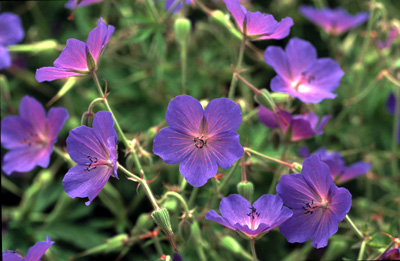
At The Garden House we have a variety of geraniums in bloom, many looking fantastic and coping well with the drought – one of them is a favourite, Geranium ‘Orion’.  It is planted prominently in our herbaceous beds, its striking violet-blue flowers really stand out, supporting the gorgeous roses (especially wonderful next to Rosa mundi) and other herbaceous perennials.  What a special and easy plant, it flowers superbly all summer long…

Common name: Cranesbill ‘Orion’

Family: Geraniaceae

Cranesbills, Geranium, comprise a genus of around 300 species of annuals, biennials and herbaceous, semi-evergreen, sometimes tuberous perennials. They are sometimes confused with the genus Pelargonium, commonly, though mistakenly, known as geranium.

Herbaceous perennial: Fully hardy, it is in the Pratense group of hardy geraniums.

This stunning cultivar has attractive, highly dissected leaves (medium green, slightly hairy with paler more hairy reverse) that almost disappear from sight when the plant is in full bloom.

It bears large violet-blue flowers up to 5cm (2in) across, with fine dark red veins with white at the centre. It starts flowering in May and can go on until the autumn.

Height & spread: 80cm (31in) high x 170cm (67in)

Soil: Fertile, well-drained to moist

Aspect: Full sun or partial shade.  Cranesbills are found in all except very wet habitats in temperate regions. They are generally easy to grow. Compact perennials, to about 15cm tall, are good for a rock garden; trailing, spreading or mat-forming plants are effective as ground cover in a woodland or wild garden. Taller, clump-forming species and hybrids are suitable for a border or among shrubs.

Cultivation:

  • Perfect for underplanting roses or filling the front of a border, coping well in full sun or partial shade.
  • Water freely in the growing season. This plant is fast-growing and will benefit from a late summer chop to tidy up its habit and encourage production of fresh foliage and extended flowering.
  • Plants may be damaged by vine weevil and sawfly larvae, slugs and snails. In dry conditions powdery mildew may be a problem.

Propagation:

  • By seed – sow in containers outdoors as soon as ripe or in spring.
  • Lift and divide large colonies in spring.

It has deservedly received the Award of Garden Merit (AGM).

Your Guide to Watering Your Vegetables!

Posted by editor on Sunday, 5 June 2011

As we’re all too aware here in the south-east, water is in really short supply and hosepipe bans almost inevitable. To be effective, it’s important to water your vegetables when they need it most – so we thought a guide to which vegetables need water and when, would be most useful!

Legumes:

Broad beans and peas need lots of water at flowering time in order for pods to set, and again two weeks after flowering begins. As young plants, avoid too much water as this can encourage leafy growth and reduce the yield. Runner beans need constant moisture for pods to set, whereas French beans are less sensitive to some dryness.

Stem vegetables:

Celery, celeriac and Florence fennel need water during growth. Periods of drought stress are very damaging and should be avoided – it can lead to bolting or poor quality crops.

Curcubits:

Courgettes need constant moisture all the way through to harvest. Marrows, pumpkin and winter squash benefit from watering but, in practice, often produce fair fruits from minimal watering. Trailing types need less water as their spreading habit conserves moisture and the stems root where they touch the ground.

Fruiting crops:

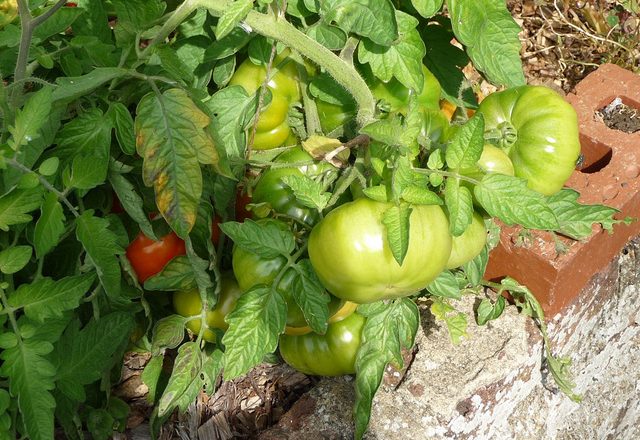
Aubergines, sweet corn and tomatoes all need watering well to aid establishment and also at throughout the flowering and fruiting period.

Leafy crops:

Cabbages, chards, lettuce and all salad crops need water at every stage of growth. If water is especially short, make sure that you soak the ground around cabbages and lettuces when hearts begin to form.

Root crops:

Carrots, beetroot and parsnips require watering before the soil becomes dry, for example, if there are 14 days without rain.

Onions, shallots and leeks need only to be watered when they are establishing, and in very dry spells.

Potatoes benefit from being watered every 10-14 days once the tubers are marble-size (more often if growing in potato-bags).

Radishes need to be watered every week in dry spells.

So, remember – by really focussing on your plants individual watering needs, you will save time – and save water!